Bug on the Tyne is all mine!

Addressing Plants
Imagine trying to find where someone lives without having their address? That’s what its like trying to find a bug without knowing its host plant. You may encounter them somewhere else, but if you know where it lives, or where it works, your life becomes much easier.
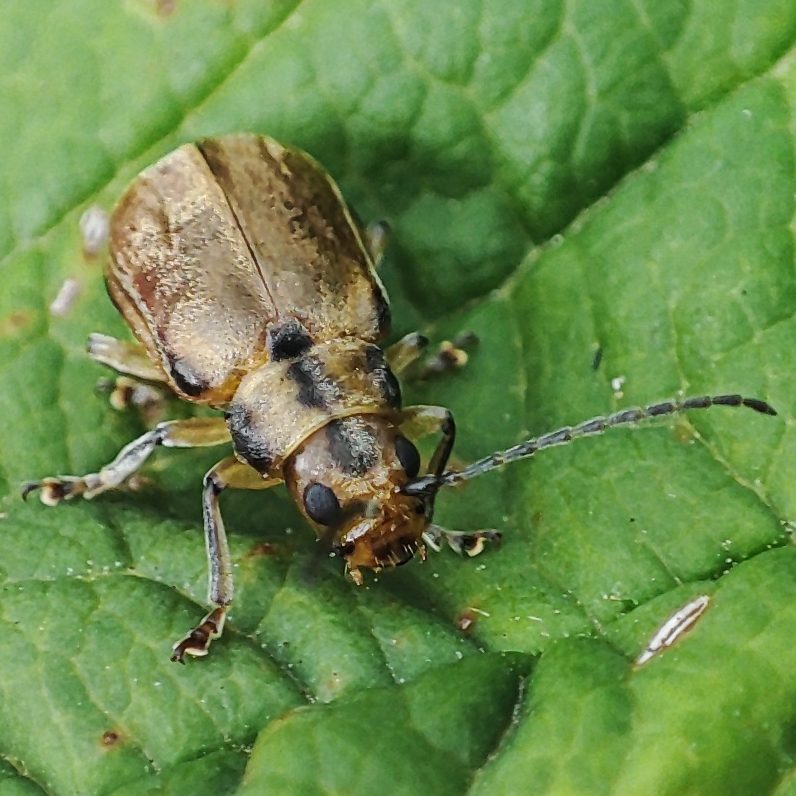
That’s the case with my highlight of the day, the viburnum leaf beetle.

This small leaf beetle spends most of its life on plants in the Viburnum family, the most common of those in Staiths is the Guelder Rose, on which I photographed them here. If I hadn’t known the plant, this ID would’ve been much more complicated (and I wouldn’t have been able to tick it off in my botany book).
They’re a great example of a typical leaf beetle (Chrysomelidae) with their large “booted” feet reminiscent of weevils and ladybirds that help them grip to flat leaves. The number and structure of beetle feet parts or “Tarsi” are actually key to identifying which beetle family you’re working with.
Bug Fact: There are over 100 beetle families in the UK, that makes identifying them all quite a “Feat”.
Fruit and flower
September is not the ideal time to start looking for bugs. The days become shorter, and the nights colder, but this is when I feel looking closer is the most important, its easy to miss the hive of activity that still pulses beneath our feet, and the newly fallen leaf litter offers a perfect home for things with many legs.
Along with the roses and beech, the Staiths riverside is a good mix of common Alder, Hawthorn, and a surprising amount of Sea Buckthorn, its yellow berries just beginning to ripen into their famous orange hue (although some may already be orange, my colourblindness can be a problem). This may be a potential foraging spot to revisit soon…

As we progress into Autumn, the mini-meadows of thistle and ragwort have all gone to seed, filling the air with a dense fluff that blusters away on the Tyne’s strong winds, but the late bloomers of hawkweed and especially toadflax are still supporting a healthy population of pollinators, including this Common Flower Fly. They have a hairy eyed sibling, but I was informed on inat that yellow hind legs and the obviously non-hairy eyes are enough to rule them out!

ID tip: You can separate common flower flies from hairy-eyed flower flies by their smooth eyes (obvious) and yellow hind thighs (or “fibia” in insects).
Eight legged feasts
There is a boom in european garden spiders among the beech hedges at the moment, and I caught one feasting on a captured greenbottle fly. Even as a spider its important to eat your greens!

Or if you’re looking for something a bit spicier, you could try a wasp too!

The final species of interest was a large Tachinid fly, known for parisitising other bugs such as caterpillars. Like punks, these big and spiky guys look scary but are actually harmless to us, and important in keeping bug populations in balance.

Wrap-up
I’m aiming to do these bug blogs semi-regularly, so won’t go into too much detail on this first one, the key takeaway is all of this isn’t from the deep forest or countryside, but from an hour walk along a local semi-urban hedgerow. The great thing about bugs is they are everywhere, so get out and see what you can find!
My next aim is to look at shield bugs, as they are armoured enough to stay out until autumn. See below for an itsy bitsy preview.

Leave a Reply